Megan Rath is a former Olympic-distance triathlete turned mountaineer. After five knee surgeries, she rebuilt her career as an endurance athlete and went on to complete the Seven Summits — including Everest — one of fewer than 100 women to do so.
Now she is returning to Everest to climb Lhotse, the fourth-highest mountain in the world, on a compressed timeline with little room for error. At 27,939 ft, it is a technical, high-risk ascent that shares Everest's route through the Khumbu Icefall, with constant exposure to avalanches and falling rock.
To make it possible, she is going beyond standard preparation — aligning her body's circadian clocks to the climb and treating circadian rhythms as a performance system. The goal: Peak at the summit.
The science behind the climb
Climbing Lhotse is a full-body physical and mental challenge. But one critical variable is often overlooked: The circadian clocks.
Circadian rhythms regulate nearly every biological system in our brain and body. The central circadian clock in our brains determines alertness, sleepiness, and when we perform at our best. Megan's journey — long-haul travel, extreme altitude, and irregular light exposure on overnight treks — will disrupt her circadian rhythms at every stage.
Circadian time, which is different from clock time, is synchronized by light. Timed correctly, light exposure or darkness can shift the body clock earlier or later to align with one's goals — in this case, Megan's Lhotse climb schedule. Timed incorrectly, it can push the body clock in the wrong direction, making your rhythms work against you and impairing performance.
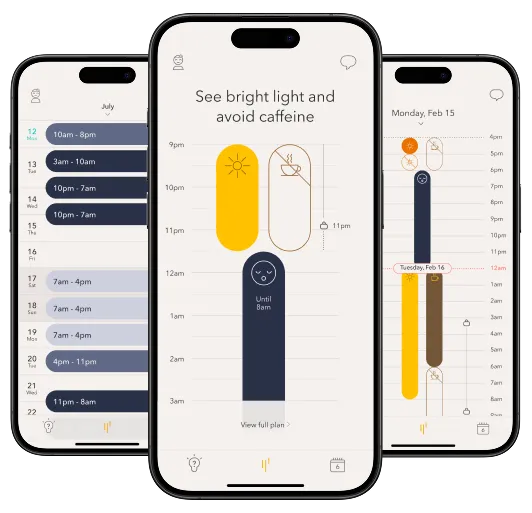
With Timeshifter on her side, Megan is following a precise plan for when to seek light and when to avoid it — through sunlight or man-made light, sunglasses, and sleep — so her body is performing at its best for every climb and, ultimately, the summit push.
The route is set
Timeshifter maps the biology.
New York
Istanbul
Kathmandu
KhumjungAcclimatization
Mera PeakAcclimatization
Everest BC
Lhotse Face
Summit27,939 ft
Key dates*
Apr 29
DepartureEWR → Istanbul → Kathmandu
May 1–13
AcclimatizationOvernight stays across increasing altitudes via helicopter transfers
May 13
Arrive Everest Base Camp
May 14
Begin trek
May 18
Summit Lhotse!
May 19–24
Descent
May 24
ReturnKathmandu → Istanbul → Home
* All dates subject to change. Built for real-world conditions, Megan's Timeshifter plan will be continuously adjusted to address delays, weather, and the unpredictability of the mountain.
Live journal
Follow Megan's journey to the summit of Lhotse with Timeshifter. Each entry tracks her location, the conditions she's facing, and how her Timeshifter plan is supporting her trek.
Summit day
May 18 · NPT
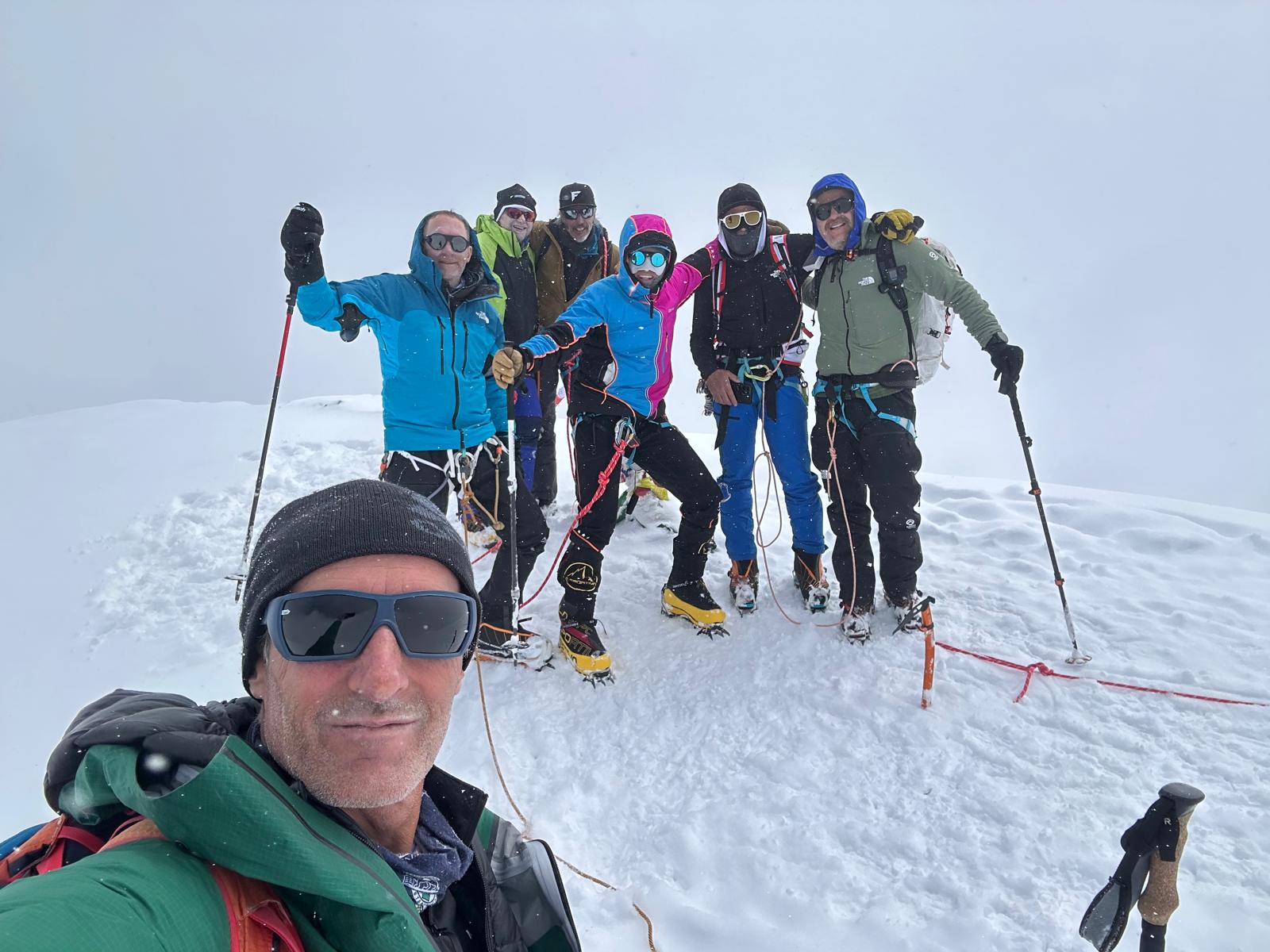
After weeks of preparation, travel, and circadian adjustment, Megan has officially reached the summit of Lhotse!
From the first shifts before departure, through travel and into the climb, her Timeshifter plan has been working her circadian timing into place — so her performance peaks at this moment.
◎Goal: Enjoy the view!
Ascent
May 14 · NPT
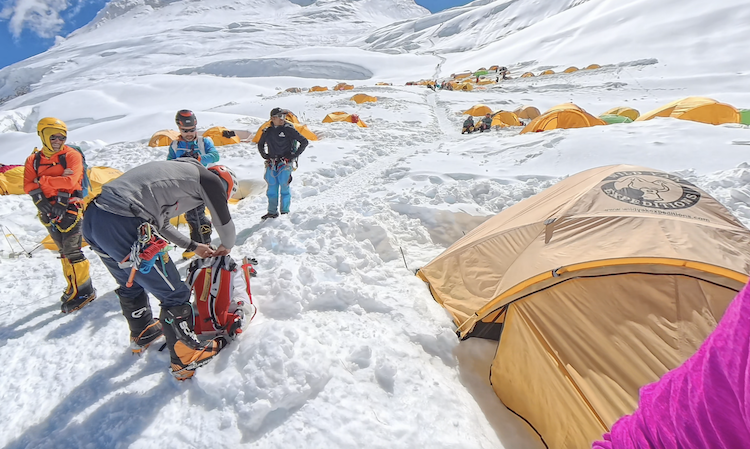
Today, Megan began her ascent, leaving Everest Base Camp to move through a series of overnight stays at high-altitude camps on the path to the summit.
Departure times vary to match narrow weather windows—some treks begin overnight, others before dawn—requiring constant adjustment.
Timeshifter adapts her schedule to each leg. For overnight climbs, she consolidates sleep during the day, then maximizes bright light exposure before departure. For early morning starts, she shifts earlier—prioritizing early sleep, and immediate light upon waking. Sleep is extended wherever possible, with naps used strategically between climbs.
◎Goal: Align her circadian peak with each departure window.
Everest Base Camp
May 13 · NPT
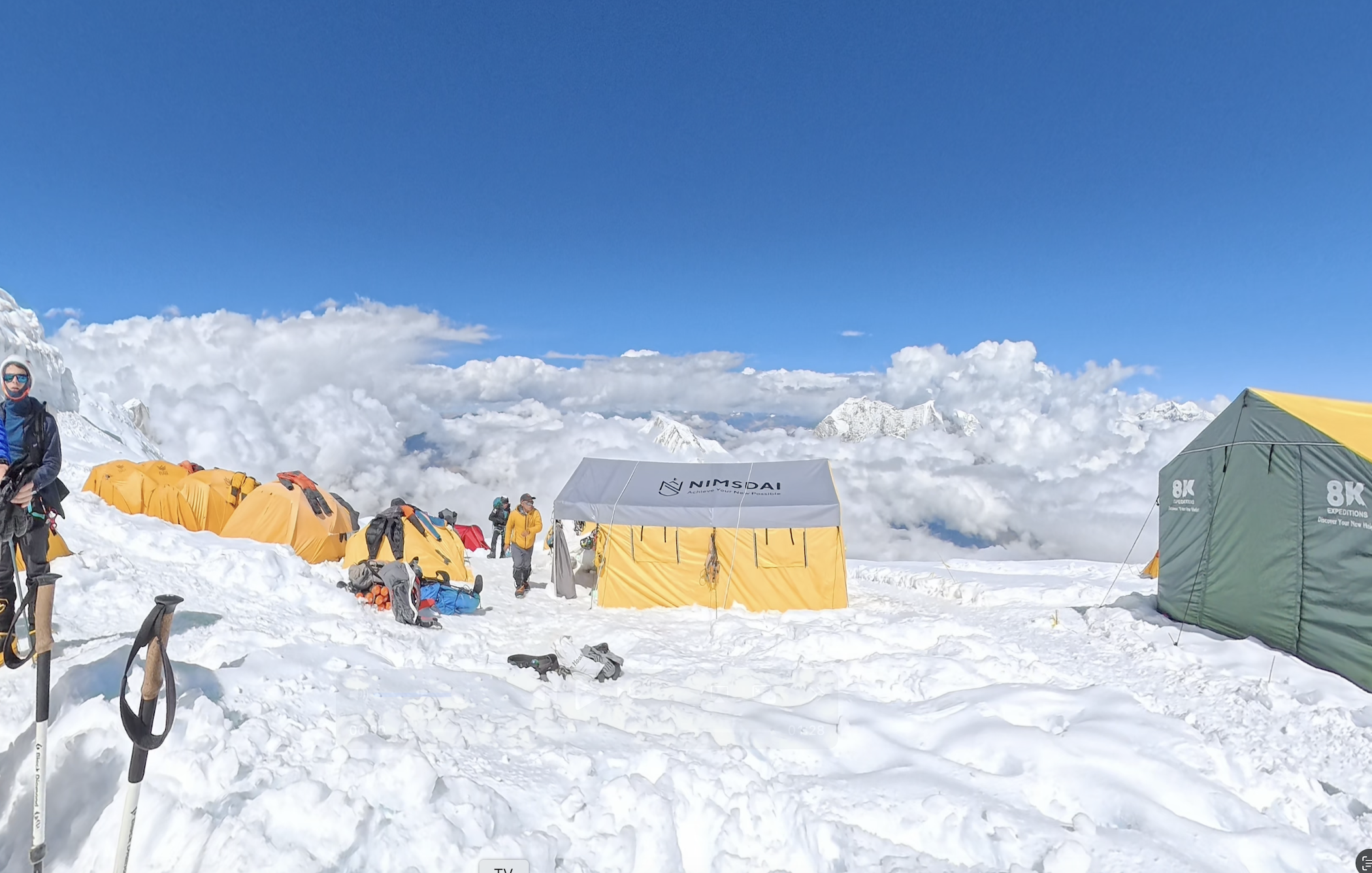
Megan has arrived at Everest Base Camp (17,598 ft), with spectacular, close-up vistas of Everest and Lhotse.
Base camp marks the transition from preparation into performance: her trek starts tomorrow.
To prepare, Timeshifter pushes her sleep schedule even earlier—toward ~7pm–4am—with immediate light exposure after waking to reinforce the shift.
◎Goal: Lock in alignment before ascent.
Acclimatization journey
May 4 · NPT
Megan begins her acclimatization journey today, moving between Himalayan villages at increasing altitudes, traveling by helicopter and adjusting to thinner air.
She'll stay in Lukla village tonight, at an altitude of approximately 9,383 feet above sea level.
Over the course of her acclimatization, Timeshifter will continue to shift her schedule earlier, targeting a stable ~8pm–5am sleep window, with immediate light exposure upon waking and no caffeine after 11am.
◎Goal: Establish a stable rhythm that can flex with changing climb schedules.
Kathmandu
May 1 · NPT
Megan has arrived in Nepal! But arrival doesn't automatically mean alignment—there's still work to do to catch her biological clock up to local time.
Today, Timeshifter guides her to avoid early light with sunglasses, prioritize daytime light, and move into earlier sleep.
"Feeling great today. Amazing what a good night of sleep does for you. Hard to do when you're crossing time zones."
— Megan Rath
Air travel
Apr 29 · ET → TRT → NPT
Megan is officially on her way to Nepal! Today, she departed from Newark for Istanbul where she'll catch her connection to Kathmandu. This long-haul travel across time zones will put immediate pressure on her body clock—disrupting sleep, alertness, metabolism, and more.
When we cross time zones faster than the master clock in our brains can adjust, our entire biology falls out of sync.
Preparation
Apr 28 · ET
This week, Megan completed her final preparations for her Lhotse expedition. She's using a hypoxic tent to simulate altitudes up to ~23,000 ft, monitoring oxygen and pulse daily, and training across cardio, strength, and yoga.
Timeshifting begins before departure, too—shifting her schedule through earlier bedtimes, reduced evening light, and earlier caffeine cutoffs. The earlier she sleeps, the faster she will adapt.
◎Goal: Start the shift before travel so arrival isn't the starting point.